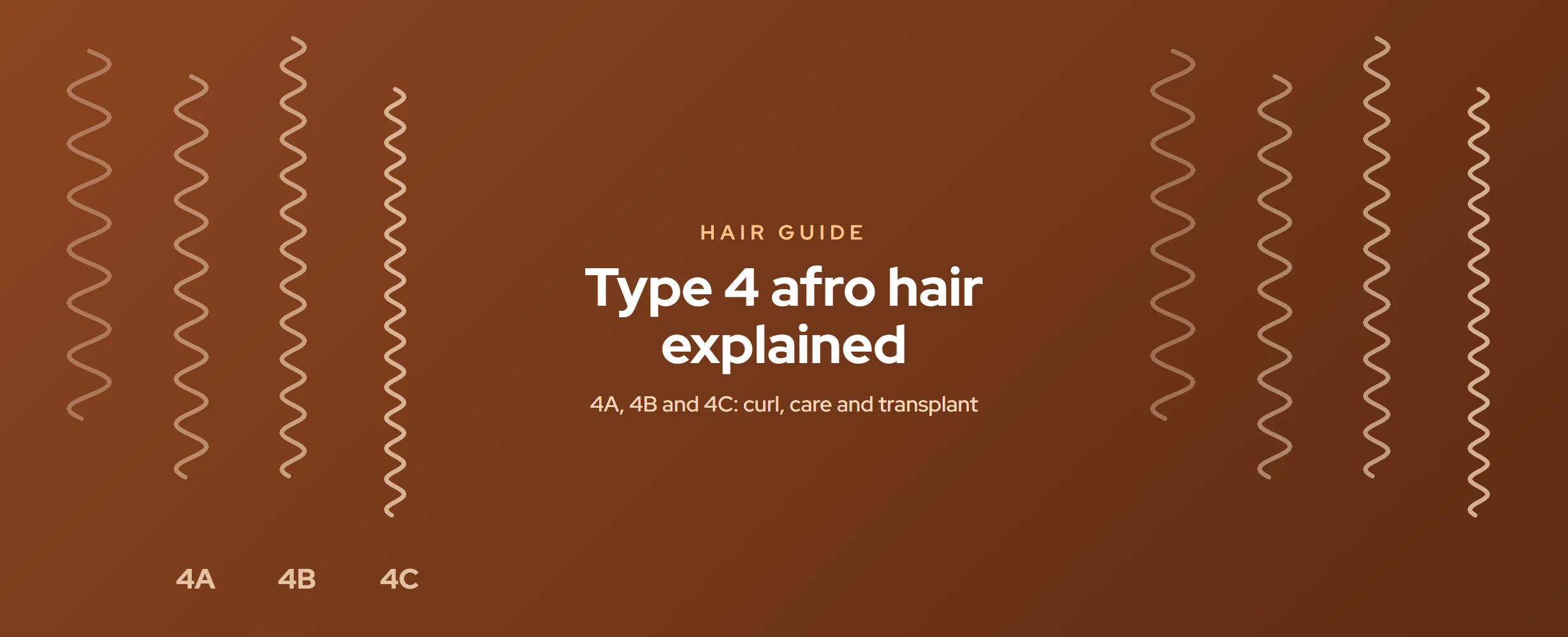

Type 4 Afro Hair Explained: 4A, 4B, and 4C Hair Guide
Afro hair is frequently associated with Africans; however, one should realize that people belonging to various ethnic groups may have such type of natural hair. Type 4 hair or Afro-textured hair can be defined as having tightly curled strands, extremely tight curls, and distinct hair growth pattern that may involve loosely spiraled or very tight, zigzag hair patterns. It does not matter whether such type of hair is called, afro curly hair, or only afro hair – all these terms point at its peculiarities, including density and great diversity.
On the other hand, those structural specifics make Afro hair more vulnerable to dryness, shrinkage, and breaking than other hair types with less tight curls. Afro-textured hair includes 4A hair type, 4B hair type, and 4C hair type; there can be a variety of hair types mixed with each other, 3c 4A hair. Understanding black hair types, including such details as the difference between 4A vs 4B vs 4C hair, is crucial for the selection of appropriate hair care practices.
Afro Hair Types: Understanding the Basics of Type 4 Hair
Also referred to as type 4 hair, Afro hair is amongst the world's most unusual and complex hair types. The density, tight curls, and high texture level make Afro hair quite recognizable. In addition, Afro hair is also popularly referred to as curly hair, and it is a key contributor to the definition of natural beauty in many individuals of mixed ethnicity amongst the world's most unusual and complex hair types and Africans.
Unlike more loose curls, such as 2A and 3B hair types, the curly structure of Afro hair is extremely tight, hence leading to natural shrinkage, which means that it tends to look shorter than it actually is. As a result, many individuals with afro hair types tend to underestimate the growth of their hair.
It is worth noting that Afro hair type has a tendency to be fragile with regard to moisture retention. This is mainly due to the tightly curled nature of Afro hair, which makes it difficult for natural oils produced in the scalp to reach the tips of the hair strands, leading to frequent dryness issues.
Breaking Down Type 4 Hair: Texture, Structure, and Care Needs
Curly type 4 hair strands exhibit kinky texture as well as tight coils. They grow in an upward-outward direction rather than falling straight down on one's face or back. Therefore, type 4 hair strands are characterized by bends that make it challenging for the oils secreted by the scalp to move from the roots to the ends of the hair strands. As a result, type 4 hair needs moisture constantly to remain flexible.
Another aspect about type 4 curly hair is the shape of the strands. Given their numerous bends and angles, type 4 hair strands experience more friction among themselves. This friction may cause tangling, breakage, and other damage to the hair strands when the
latter are styled frequently or handled roughly. Thus, careful treatment of the hair is essential in this regard.
Finally, type 4 curly hair has high shrinkage levels. One may not recognize the extent of hair growth since most strands of this hair type shrink up to 70% or more upon drying. Despite this inconvenience, it should be regarded positively as an indicator of healthy hair strands with good elasticity.
Main Features of Type 4 Natural Hair
Despite being classified differently into type 4A, 4B, or 4C hair types, type 4 hair has common attributes regardless of the classification. Type 4 hair typically consists of tight curls or kinks together with high shrinkage levels, making it shorter visually than its actual length. Some individuals' type 4 hair may be soft, whereas others may have coarser strands.
An important consideration regarding black hair types is the belief that they take long to grow because of their texture. However, contrary to popular opinion, hair growth is almost equal among textures because of the varying retention of length among these hair types. The reason for the slow growth rate of type 4 hair is because of the increased potential for dryness and breakage, requiring maintenance of proper moisture balance.
Different Subtypes Within Type 4 Hair
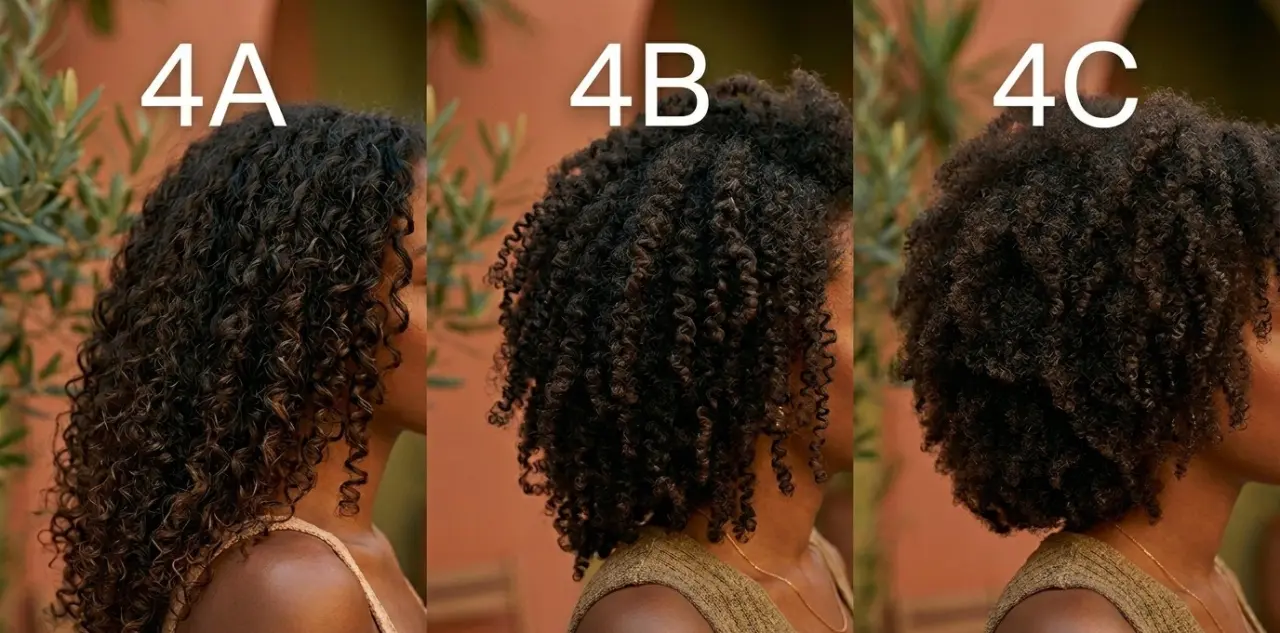
Among the four categories of black hair types, type 4 is further subdivided into three primary types as follows:
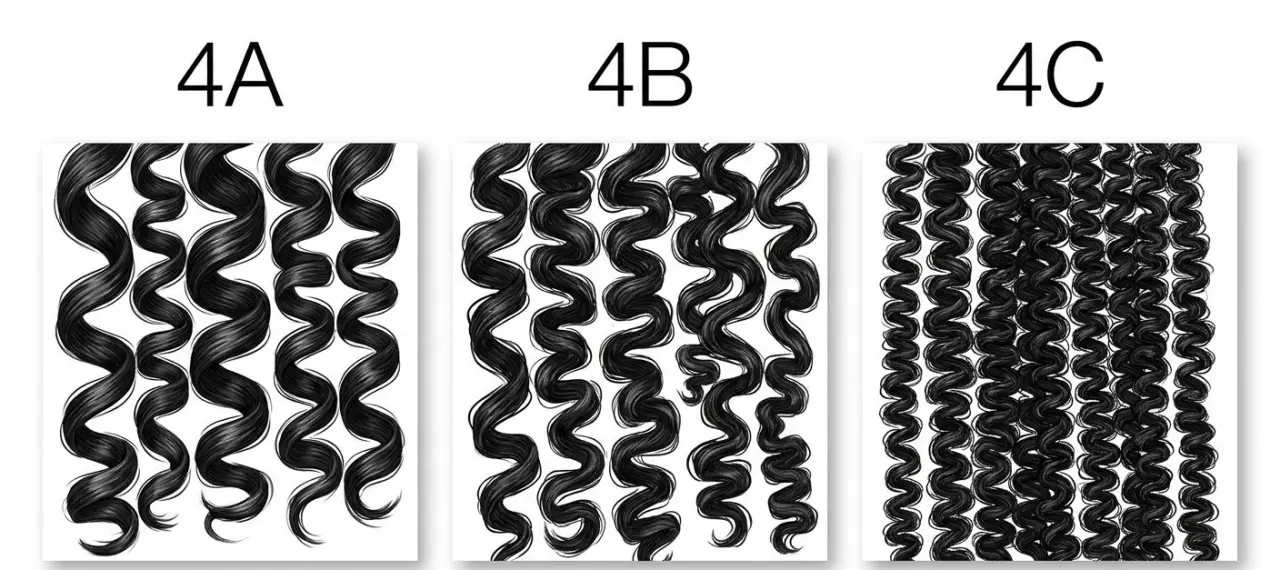
4A type: S-curl formation and are more pronounced and soft in nature.
4B type: Zigzag and sharp appearance without much curl definition.
4C type: Very tightly curled with not many curls to define.
There are different ways to treat each category of hair separately. For instance, for 4A curly hair, curl definition can be applied whereas 4C hair will require more moisture-retaining methods such as cream and oils.
4A Hair Type: Definition and Key Characteristics
What Makes 4A Hair Unique
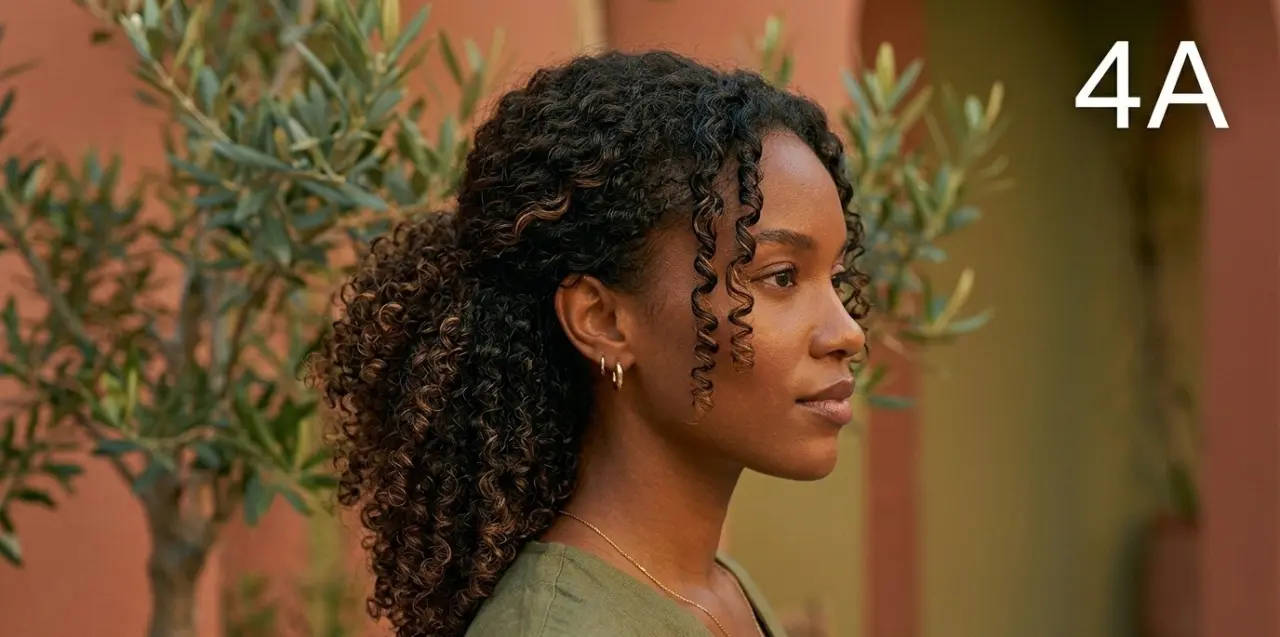
Texture 4A hair is commonly seen as one of the most well-balanced among 4 types of hair. The hair possesses well-defined curls, which have an obvious S-shape appearance, thus allowing for better management than other tighter curl patterns such as 4B and 4C hair. The hair texture provides a high level of versatility without compromising the volume characteristic of Afro hair.
The defining feature of 4A hair type is the ability to retain curls when well-moisturized. Nevertheless, even in the presence of a defined curl pattern, there is a need for moisture maintenance.
4A Hair Texture and Daily Behavior
- -Straightforward curl formation with clear S-bend formations
- -Curls of moderate size that provide volume and structure
- -May be soft to the touch despite its full appearance
- -Shrinkage is evident, though not as difficult to handle as some other hair types
- -Type 4A hair texture may range from fine and smooth to coarse
- -Sturdier than other 4 hair subtypes but still requires adequate hydration to avoid brittleness
Styling 4A Hair for Men
The styling possibilities for 4A men are varied as well. Some of the most common hairstyles for 4A textured hair for men include sponge curls, taper fades with curly hair on top, and short afros that showcase the curl pattern. Proper hair care will ensure that 4A hair is structured yet soft.
4B Hair Type: Definition and Key Characteristics
What Makes 4B Hair Unique
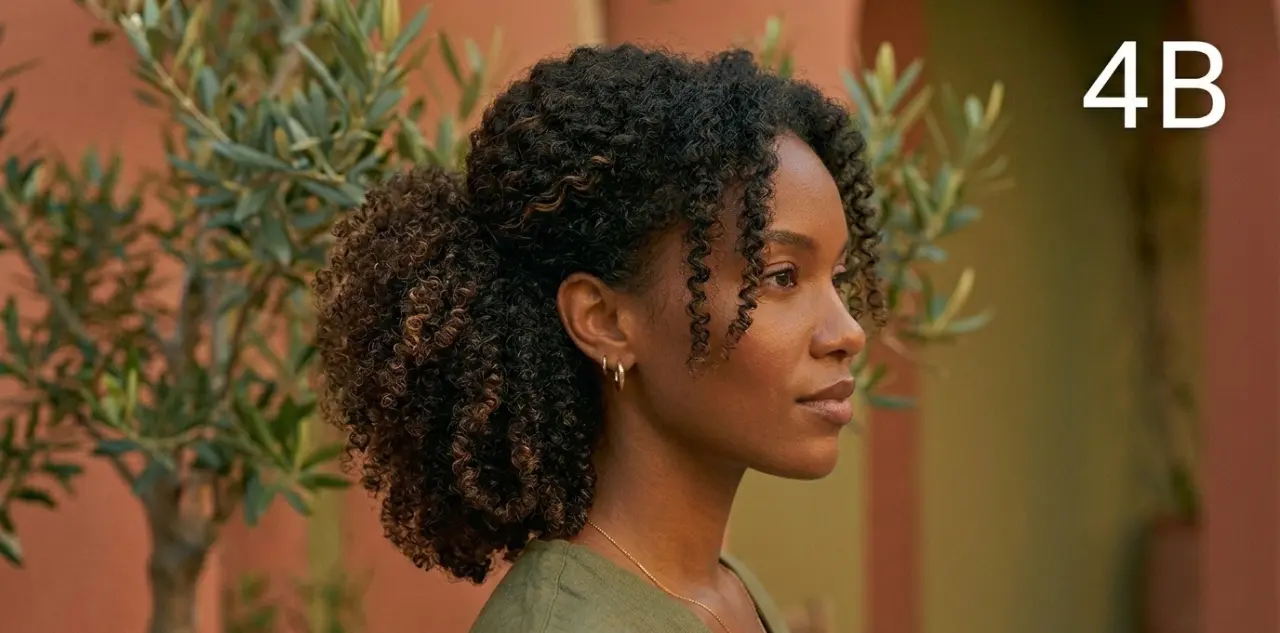
One unique feature about 4B hair is that it has a very noticeable zigzag form of curl, unlike the more pronounced curly hair seen in 4A hair type. The hair does not have clearly defined ringlets but is bent at various angles to give it more bulkiness and a cloudier look.
The other special characteristic about 4B hair is how it catches light and its general shape. The curling pattern of this hair is irregular, and thus the curls do not seem very defined. This gives it a fluffy texture which can be used to create natural afros and texturized haircuts.
4B Hair Texture and Daily Behavior
- -A Zig-zag or “Z” configuration with hardly any curl definition
- -Dense and may vary between soft or coarse hair texture
- -Vulnerable to shrinkage, giving the hair a shorter appearance than it actually is
- -Moisture loss prone; needs regular moisturizing
- -Easy to tangle because of the way it is configured
- -Sensitive to changes in humidity levels, leading to expansion to a fully curled afro style
Styling 4B Hair for Men
Styling men’s 4B hair revolves around shaping, moisturization, and limited manipulation. Due to the volume of this hair, styling options such as tapers and fades, short afros, and sponge twists are quite popular since they accentuate the texture without causing tension to the hairs.
Before styling type 4 hair, it is necessary to ensure proper care is administered through the use of hair moisturizers, hair conditioners, and oils. Styles that do not need daily combing or heat such as twists are particularly useful in promoting the health of the hairs.
4C Hair Type: Definition and Key Characteristics
What Makes 4C Hair Unique
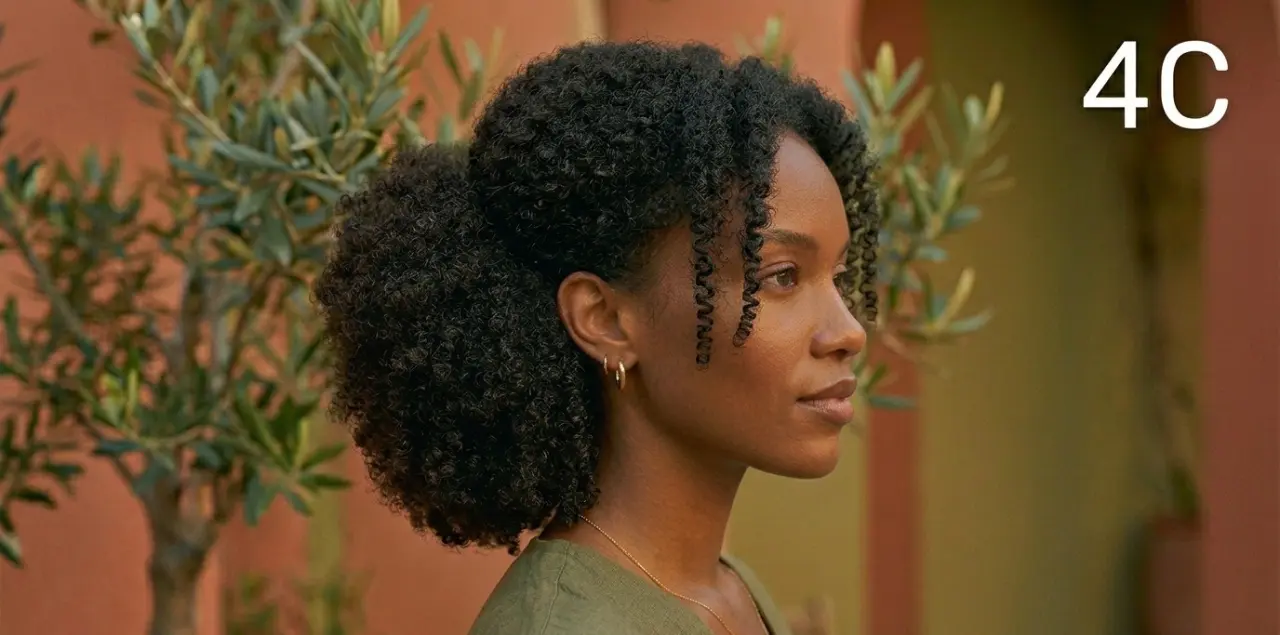
The coiling pattern in 4C hair is the tightest in type 4 hair. It does not have defined curls compared to other types since the hair appears curly only if it is either pulled or styled. The hair takes on this texture because of how tightly it coils, which makes it very versatile and able to adapt into various hairstyles from afro-style to protective styles.
The unique thing about 4C hair texture is that it is able to produce a lot of volume despite being shorter in length. The strands tend to spread out, making the hair look full and textured. Nevertheless, because of its tight coiling, 4C hair requires more care than other hair textures.
4C Hair Texture and Daily Behavior
- Has very tight curls with hardly any curl pattern visible in its natural form
- Some people have very fine hair that is soft and some others have coarse and thick hair
- Shrinks extremely due to which it looks very short compared to its actual length
- Naturally dry hair since oils do not travel up the strand easily
- Vulnerable to tangling and breaking if moisture and proper care are not provided
- Easily expands with moisture to develop afro hair style
Styling 4C Hair for Men
With regards to styling 4C hair for men, this will mainly involve ensuring that the hair is well taken care of and bringing out its best texture. Styling choices such as short afros, tapers, and sponge curling are common among 4C hair types because of the fact that they do not need too much work each day to look great.
It is important to ensure that there is enough moisture in your hair during styling. You could try using a lot of leave-in conditioning products, cream and even oils before you start to style your hair.
Comparing 4A, 4B, and 4C Hair Types
In comparison, the key differences between 4A, 4B, and 4C black hair can be seen in the curl definition, shape of individual strands, and the general behavior of each hair texture. While all these hair types fall into category 4, they are different in terms of their curl definition, curl definition, and coiling pattern. Thus, 4A curly hair is marked by distinct S-shape coils, while 4B is characterized by tighter zig-zag coils that are not as clearly visible as those in 4A type hair. Finally, 4C curly hair has the most tightly curled coils, which may lack any visible coiling pattern unless stretched.
As far as the behavioral characteristics go, 4A curly hair can be easily styled using light hair products due to well-defined curls. At the same time, 4B hair texture is typically heavier than other types due to the angular shape of curls, thus demanding constant moisture supply. Finally, 4C hair texture is characterized by maximum shrinkage rate because of densely coiled curls that prevent moisture from penetrating through hair.
The various styling techniques may also differ. 4A hair in men is best suited to curls or sponge styles, while 4B hair men would suit afro hairstyles or tapers. The most beneficial hairstyle for men with 4C hair would be twist or low manipulation afro hairstyles. Regardless of how different these three types of hair texture may seem, they all have the same requirements.
Afro Hair Care: Healthy Routines and Maintenance Tips
The key elements for proper afro hair care include moisturizing, protecting, and low manipulation. As a matter of fact, due to the natural properties of type 4 hair, moisturization needs to be regular and deliberate.
Deep conditioning is aimed at restoring the elasticity of the hair, whereas conditioners serve as a means to ensure the balance of daily hydration. Protective styles include such techniques as braiding, twisting, and making buns.
In addition, selecting the appropriate hair products is vital. Shea butter, coconut oil, and aloe vera are widely used in black hair types care routines.
The Role of Hairstyles in Type 4 Hair Health
However, hairstyles are not only meant for aesthetics; they also play a vital role in ensuring that your hair stays healthy. This includes type 4 hair where low manipulation styles ensure that the hair does not come under strain and that it retains its moisture for extended periods.
Black men hairstyles must take this into consideration since excessive manipulation may cause breakage of the hair.
Identifying Type 4 Hair in Short Hairstyles
Type 4 hair can even be determined using the curls’ tightness, thickness, and growth patterns despite the style being short. With time as the hair grows, these characteristics will become evident as one determines which category they fall into – 4A, 4B, and 4C hair types.
This comes handy especially for people who are trying to transition from chemically treated hair to natural hair.
Final Thoughts on Afro Hair Diversity
The Afro texture is one of the most complex hairstyles that exist. Whether it is soft 4A or tight 4C, every hair texture has its own beauty and requirements.
Knowing about different black hair types is important, but it goes beyond mere categorization. It involves appreciation, learning, and accepting your natural self. When handled properly, type 4 hair can become very flexible and durable.
Frequently Asked Questions (FAQ)
What is Afro hair and how is it categorized?
Afro hair refers to naturally coiled hair textures typically found in type 4 hair, categorized into 4A, 4B, and 4C based on curl tightness.
What are the differences between 4A, 4B, and 4C hair?
4A has defined curls, 4B has zig-zag patterns, and 4C has very tight coils with minimal definition.
How can I identify my hair type correctly?
By observing curl pattern, shrinkage level, and texture when hair is wet and dry.
Is 4C hair more fragile than other types?
It is more prone to dryness, but not inherently weak when properly cared for.
What products are best for type 4 hair care?
Moisturizing creams, leave-in conditioners, and natural oils are commonly used.
How often should Afro hair be moisturized?
Ideally several times a week depending on dryness levels.
What hairstyles suit 4B hair for men?
Afros, fades with texture, twists, and protective styles work well.
Can hair type change over time?
Texture can appear different due to damage or growth, but natural curl type remains mostly consistent.
What is a hair type chart used for?
It helps identify and compare different curl patterns such as 4A 4B 4C hair chart.
How can I reduce breakage in type 4 hair?
By keeping hair moisturized, avoiding excessive manipulation, and using protective styles.

Laura Whitfield
Writes the clinic comparisons and guides for Turkey Hair Clinic Reviews. Every ranking follows our published methodology, and every price is checked against what the clinic itself publishes.